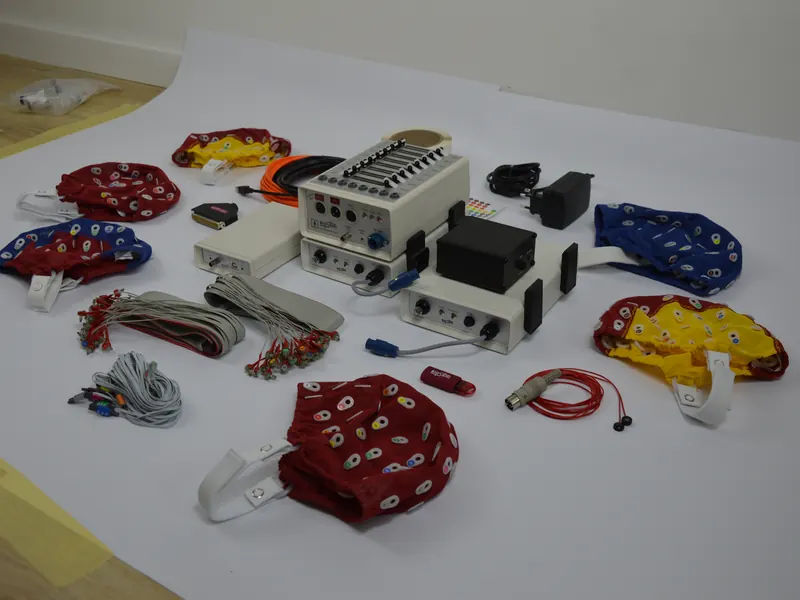
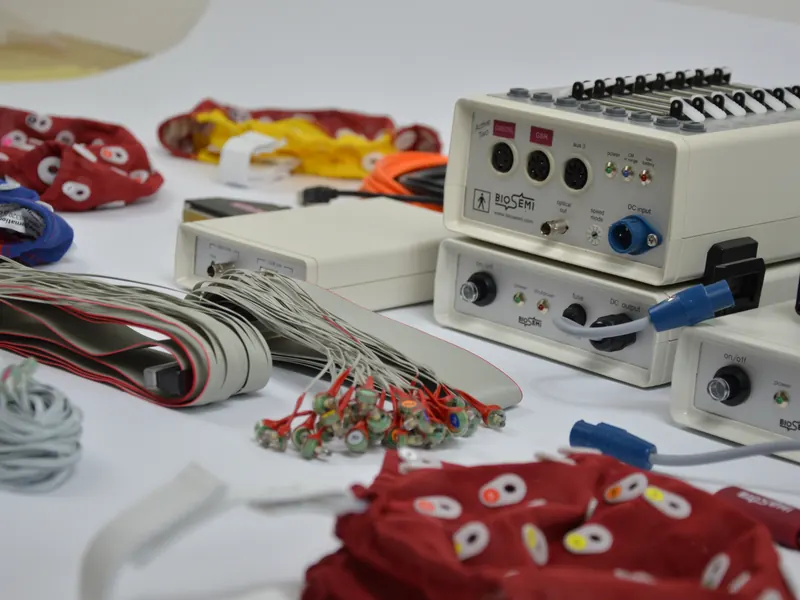
The end of ActiveTwo: what next for your BioSemi system?
As of May 2026, you can no longer buy a new ActiveTwo. Systems in use will not suddenly stop working, but their future depends on the serial number. We explain how to read it and what follows from it.
In short: Systems numbered ADC16 and later can be upgraded to Active2.5 and used until 2035. Systems ADC15 and earlier (made before 2010) are no longer supported. Any ActiveTwo can be traded in towards an ActiveThree.
What has changed
For years ActiveTwo was BioSemi's main system, and it still runs in many labs. Over the last two years the manufacturer has moved sales to a new platform, ActiveThree. According to information BioSemi issued in April 2026, new ActiveTwo systems can no longer be ordered after 1 May 2026. The manufacturer has reserved the remaining parts for servicing more than two thousand systems still in use around the world.
So it is worth checking which group your system belongs to and planning the next step before an electrode set breaks halfway through data collection.
How to read the serial number
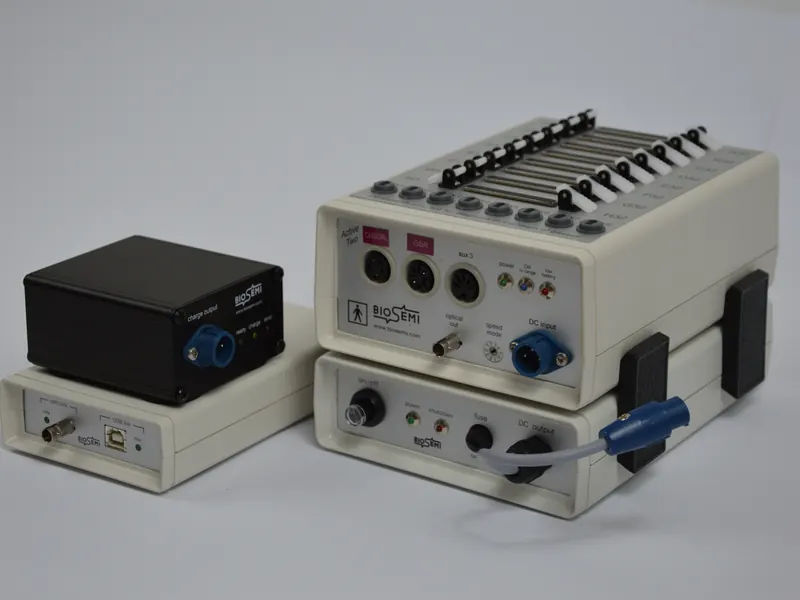
You will find it on the rating plate of the AD-box. It has the form ADC followed by a number, e.g. ADC17. That number determines what you can do:
| Number | What you can do |
|---|---|
| ADC16 and later | Upgrade to Active2.5 (Mk2.5). After that the system can work in its current configuration until 2035 and use the new electrodes. |
| ADC15 and earlier | Systems made before 2010. The manufacturer no longer supports them. The solution is to replace them with ActiveThree. |
| Any ActiveTwo | Can be traded in towards an ActiveThree, regardless of age and condition. We give the terms in our quote. |
What the upgrade to Active2.5 involves
The upgrade is done by the manufacturer in Amsterdam. BioSemi replaces the top PCB and the housing of the AD-box and changes the connectors on the electrode sets from MK2 to MK3. If you have type A sets with integrated CMS/DRL electrodes, the manufacturer cuts them off and supplies a separate CMS/DRL cable, because Active2.5 and ActiveThree support only that version.
The conversion usually takes 1–2 weeks, depending on the number of electrode sets. Add shipping both ways. After the upgrade you operate the system as before, and data is still saved in BDF format.
What about the electrodes
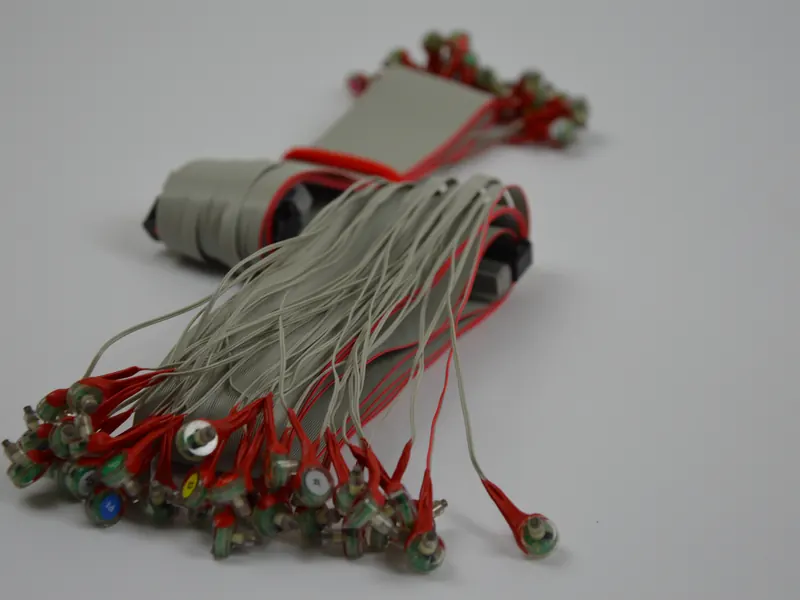
This is where most people get confused. Compatibility depends on two things: the connector (MK2 or MK3) and the PCB inside the electrodes.
- Electrodes with a green PCB (made until April 2024) work with ActiveTwo and Active2.5, but not with ActiveThree.
- Electrodes with a red PCB (made since May 2024) work with all three versions. For Active2.5 and ActiveThree they need an MK3 connector.
If you choose the Active2.5 upgrade, some of your current sets can keep working after the connector has been replaced. If you move to ActiveThree, sets with a green PCB will have to be replaced with new ones.
Upgrade or replacement
An upgrade is cheaper and quicker. It makes sense when the system is in good condition and 128 channels and the existing functions will be enough for the next few years. Consider replacing it with ActiveThree when:
- you have an ADC15 system or older,
- you are planning hyperscanning with sampling above 2 kHz or with more than four modules,
- you need to buy new electrode sets anyway,
- you have grant funds that must be spent on equipment.
How to plan it without downtime
- Take a photo of the plate with the serial number and list your electrode sets: how many there are and which connectors and PCBs they have.
- Send this to us. We will tell you what is possible and what it costs.
- Choose a date outside your data collection period. The conversion and shipping together usually take 2–3 weeks.
- Deal with the paperwork at your university. Our contract templates have already been through several procurement offices.
- When the equipment comes back, we test it in your lab and show you what has changed.
Details and a compatibility table are also on the ActiveTwo upgrade page.
Sources: BioSemi information for representatives (July 2025, April 2026); BioSemi FAQ on the Active3 system.

Dr Marta Szewczyk
Cognitive psychologist with a PhD in EEG/ERP research on attention (John Paul II Catholic University of Lublin). She leads BioSemi installations and teaches EEG recording.