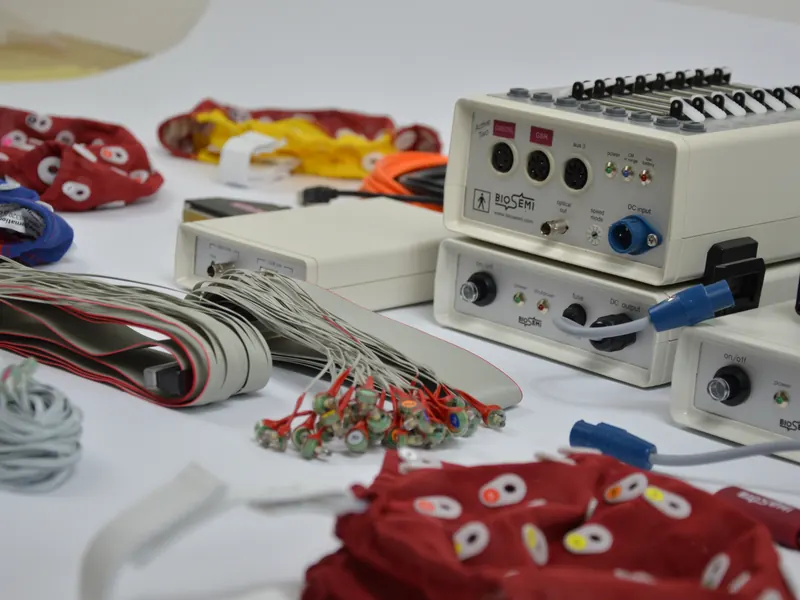
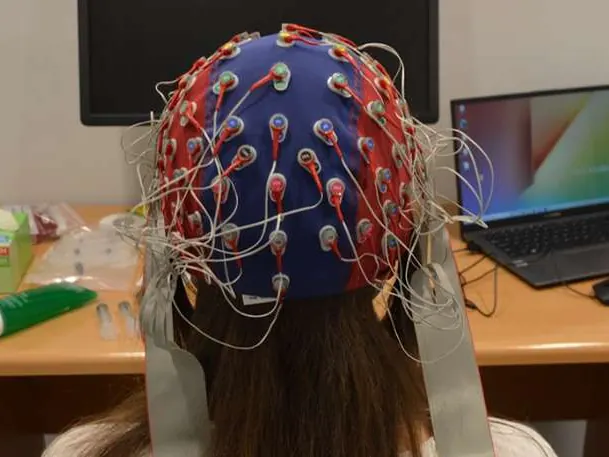
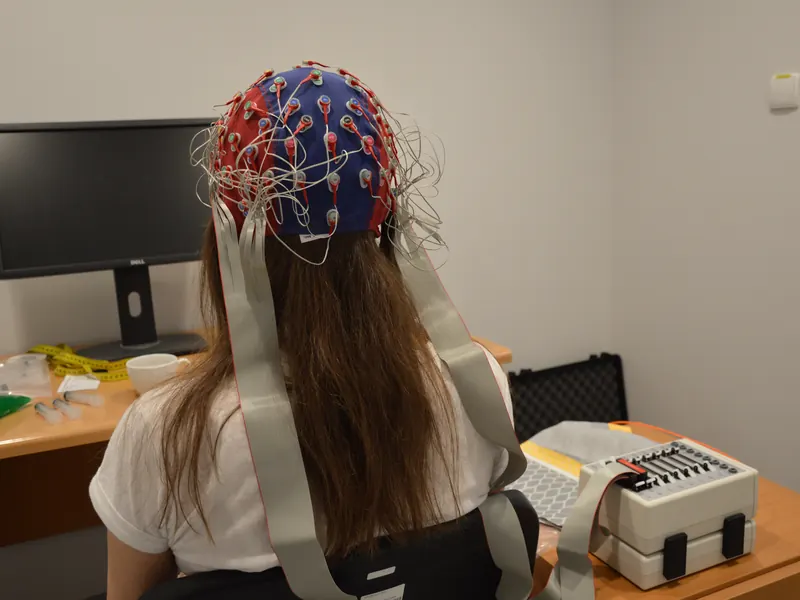
How to care for BioSemi electrodes and caps so they last longer
Electrodes are the most frequently replaced part of a BioSemi system. Most of the damage we see in service comes from a few recurring mistakes. We have collected the rules from the manufacturer's manual and from our installations.
In short: Rinse electrodes with warm water right after each session, do not bend the cables, do not pull on the flat cable, keep water and gel away from the connector, disinfect only with alcohol and store the electrodes on the stand in a dark place.
The manufacturer's five rules
- Do not bend the electrode cables, especially where the cable enters the electrode housing.
- Clean the electrodes gently, by hand, with warm water, right after the session, while the gel is still soft.
- Do not use aggressive cleaning agents. Do not let the electrodes touch metal.
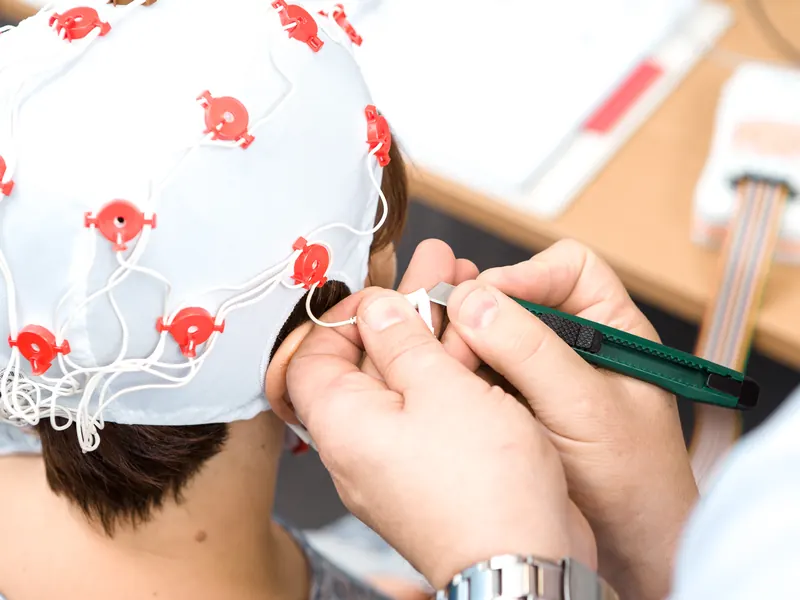
- Take the electrodes out of the cap by holding the housing, never the flat cable.
- Do not let water or gel get into the connector.
Cleaning after a session
Rinse off the gel under warm running water, up to about 50°C. Make sure the connector stays dry. Remove residue with a soft brush only when it is really necessary. Cleaning too hard speeds up electrode wear, and frequent bending damages the cables.
Dry the electrodes with a paper towel and leave them to dry on the stand supplied with the kit. Use soap only when water is not enough. Never use solvents (e.g. acetone), acids or alkalis.
Do not leave electrodes with dried gel on them. They are harder to clean later and the cables are easier to damage. The manufacturer also advises against soaking electrodes. If you have to, do not soak them for longer than 15 minutes.
Disinfection
It is usually not needed, because active electrodes do not require skin abrasion. If you must disinfect, use only alcohol – the manufacturer has tested it and found that it does not harm the electrodes. Other disinfectants corrode the Ag/AgCl tips, which often causes them to crack.
The connector
When unplugging the connector from the module, use the tabs on the AD-box housing. If the connector gets contaminated with gel or salt water, rinse it with distilled water and then with ethanol. Gel in the connector can cause a short circuit.
Storage
- Hang the electrodes on the cable stand in a dark place. Light damages the Ag/AgCl layer.
- Do not store them in a metal box. Contact with metal contaminates the tips and increases noise.
- Do not cut the flat cable. This risks a fault that cannot be repaired and voids the warranty.
The salt-water test
If an electrode is not working properly, immerse the set in a non-metallic bowl of water with a teaspoon of salt. If the blue LED goes out, the set needs repair. If noise appears in the recording, the electrode is probably reaching the end of its life. The manufacturer describes two ways to extend the life of such an electrode (an exception to the rule that electrodes should not be soaked): soaking it in salt water for an hour before the recording, and gently polishing the tip with 600-grit or finer sandpaper. Treat polishing as a last resort.
How long electrodes last
Ag/AgCl electrodes have a limited lifespan. According to the manual, after about 200 recordings low-frequency noise slowly increases: you see it as baseline drift and higher offsets. After a similar number of sessions, broken or kinked cables also become more common. That is why a spare set is worth having in projects that last several years.
Batteries
Charge the batteries soon after the system has switched off because of low voltage. Before storing them for a longer period, charge them fully, and top up stored batteries every 6 months. The manufacturer estimates their life at about 1000 full cycles.
Source: ActiveTwo system manual (BioSemi, version 3.2, Polish translation by Neurostimulus), chapter on maintenance and care. The rules apply to BioSemi active electrodes, including in Active2.5 and ActiveThree systems.
Dr Marta Szewczyk
Cognitive psychologist with a PhD in EEG/ERP research on attention (John Paul II Catholic University of Lublin). She leads BioSemi installations and teaches EEG recording.