EEG biofeedback: facts and myths. What research tells us in 2026
We have been teaching EEG biofeedback courses since 2015. In that time many new studies have appeared, including some that temper earlier enthusiasm. Here is an honest summary of what is known today.
In short: In ADHD the effects are disputed. When symptoms are rated by people who do not know who was in the training group, the improvement is small or absent. A small benefit appears with standard protocols. SMR and SCP training in drug-resistant epilepsy is better documented. In autism the research is preliminary. The method is safe, but it does not replace treatment.

What EEG biofeedback is
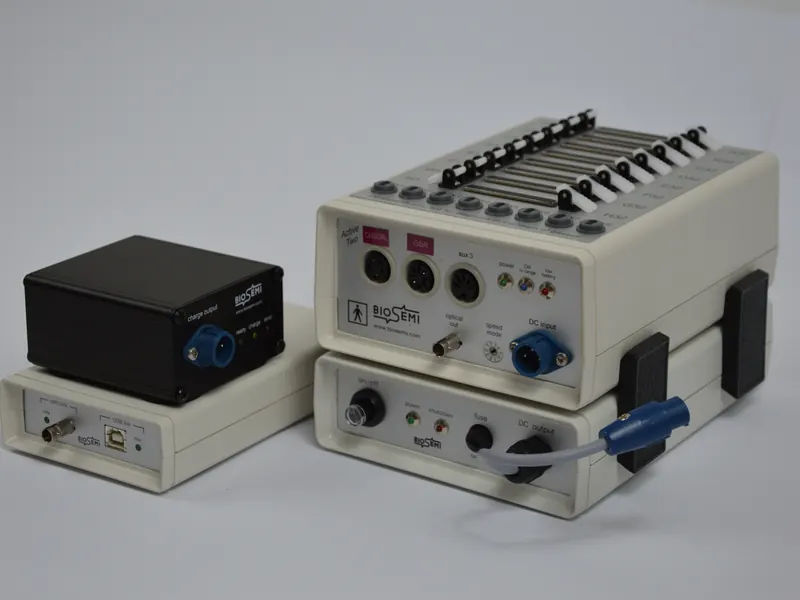
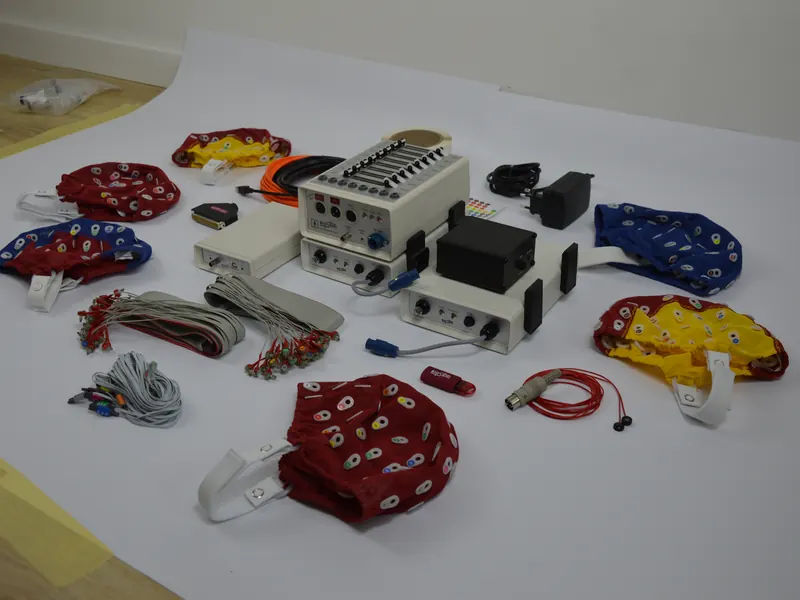
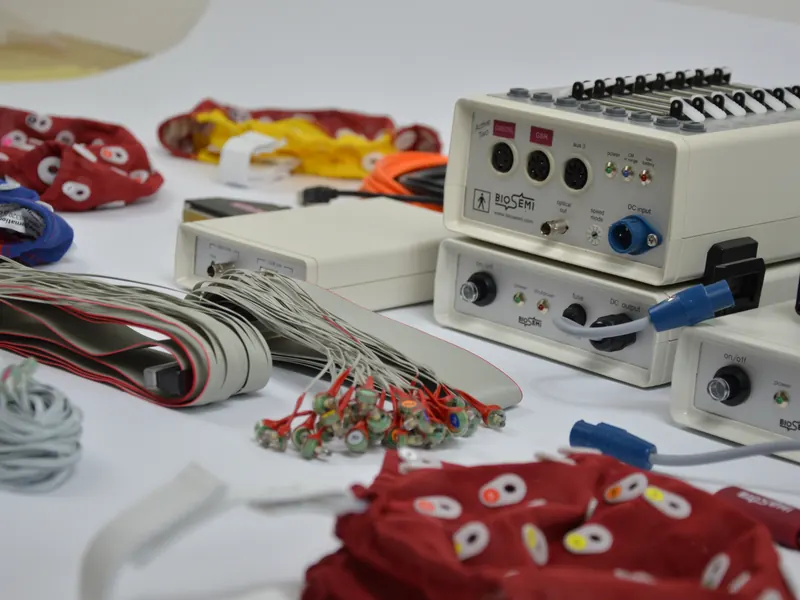
EEG biofeedback, also called neurofeedback, is training in which a person sees or hears information about selected parameters of their own EEG and learns to change them. For example, an animation on the screen speeds up when activity in the SMR band increases. The device only records the signal. It sends nothing to the brain.
Three types of training are the best documented. In the literature they are called standard protocols: lowering the theta/beta ratio, strengthening the SMR rhythm and slow cortical potential (SCP) training.
ADHD: what the new studies show
For years the most debated question was who rates the effects. Parents who know that their child has had the training usually see a clear improvement. When the raters do not know who was in the training group, the effect shrinks.
- The meta-analysis in JAMA Psychiatry (Westwood et al., 2025) included 38 randomised trials with 2472 participants. When symptoms were rated by people who most likely did not know who was in which group, neurofeedback did not reduce them to a statistically significant degree. A small improvement appeared only in studies using standard protocols. In neuropsychological tests, only processing speed improved.
- A double-blind trial (Arnold et al., 2021) included 144 children with ADHD. Both groups – with real theta/beta training and with sham training – improved clearly. There was no difference between them, either after the training or 13 months later.
- Proponents of the method (Arns et al., 2020) point out that in multicentre studies with standard protocols the effects are moderate (medium-sized) and last 6–12 months. Another meta-analysis (Bussalb et al., 2019) showed that results are better with more intensive training and better-quality EEG equipment.
How to read this: part of the improvement after training comes from non-specific effects – the therapist's attention, regular sessions, the family's expectations. Neurofeedback can complement work with a child with ADHD, but it does not replace treatment recommended by a doctor or behavioural therapy.
Epilepsy and other uses
SMR and SCP training in drug-resistant epilepsy, as a complement to neurological treatment, has a better evidence base. Heart rate variability (HRV) biofeedback for anxiety also does well in reviews. Alpha asymmetry training for depression looks weaker, because the marker it is based on has not been confirmed in later studies.
In autism there are few studies, usually on small groups and often without a control group. Reports of improvement should be treated as preliminary. Our old training materials were more optimistic about this than the data allow today, and we have changed that part of the programme.
QEEG, or brain maps
Quantitative EEG analysis (QEEG) compares a person's recording with a normative database and presents the result as maps. It can be useful for planning training, but it is not a tool for diagnosing disorders. An example: for years a high theta/beta ratio was considered a marker of ADHD. A 2013 meta-analysis (Arns, Conners and Kraemer) showed that this marker is not specific enough to base a diagnosis on, because it also occurs too often in people without ADHD.
Common myths
"Biofeedback works during sleep or without the person taking part." No. Training means learning from feedback, so it requires attention and active participation.
"Biofeedback changes personality or beliefs." No. Training targets selected EEG parameters and is meant to help, for example, with control of attention or arousal. No research points to a change in personality or views.
"The more sessions, the better." What matters more is intensity and whether the person actually learns to control the signal. Some trainees never do. It is worth checking progress in the recording, not only in how the person feels.
"It is a dangerous method." Large studies have not reported serious adverse effects related to neurofeedback. The real risk is giving up a treatment with better-documented effectiveness.
What this means for practitioners
- Use standard protocols and describe how you run the training.
- Measure effects with tools that are not influenced by expectations, e.g. neuropsychological tests or teacher ratings.
- Talk to parents honestly: the method may help some people, but there is no guarantee of an effect.
- Plan training together with the doctor and other specialists, not instead of them.
- If you do research, use the CRED-nf checklist (Ros et al., 2020), the agreed standards for designing and reporting neurofeedback studies.
This is how we teach on our EEG biofeedback courses.
References
- Westwood S.J. et al. (2025). Neurofeedback for Attention-Deficit/Hyperactivity Disorder: A Systematic Review and Meta-Analysis. JAMA Psychiatry, 82(2), 118–129.
- Arnold L.E. et al. (2021). Double-Blind Placebo-Controlled Randomized Clinical Trial of Neurofeedback for ADHD With 13-Month Follow-up. Journal of the American Academy of Child & Adolescent Psychiatry, 60(7), 841–855.
- Arns M. et al. (2020). Neurofeedback and ADHD in Children: Rating the Evidence and Proposed Guidelines. Applied Psychophysiology and Biofeedback, 45, 39–48.
- Bussalb A. et al. (2019). Clinical and Experimental Factors Influencing the Efficacy of Neurofeedback in ADHD: A Meta-Analysis. Frontiers in Psychiatry, 10, 35.
- Arns M., Conners C.K., Kraemer H.C. (2013). A decade of EEG theta/beta ratio research in ADHD: a meta-analysis. Journal of Attention Disorders, 17(5), 374–383.
- Ros T. et al. (2020). Consensus on the reporting and experimental design of clinical and cognitive-behavioural neurofeedback studies (CRED-nf checklist). Brain, 143(6), 1674–1685.
- Melo D.N. et al. (2025). Biofeedback and Neurofeedback in the Clinical Setting: A Review of Their Application and Efficacy in Neurological and Psychiatric Conditions. International Health Sciences Review.

Dr Rafał Szewczyk
Psychologist and economist with a PhD from the Jagiellonian University. He has taught EEG biofeedback courses and installed EEG equipment for many years.